The digital transformation of the economy, indeed our entire world, is well underway. Shopping online, finding partners, having conferences, voting, learning, booking appointments, listening to podcasts, streaming films, and so on – all of this is now an indispensable part of our daily lives.
Customers are accustomed to reaching their destination with just a few clicks. They have no idea of the complex transformation processes that were and still are necessary behind the scenes, within the various companies, to offer all these services while still operating efficiently. However, precisely because digitalisation has made so much so fast and so easy, the pressure is increasing on industries and sectors that have not yet transformed or have not fully transformed. Take online sick notes, for example. Previously unthinkable, then controversial, they became common practice and a sought-after technology practically overnight during the pandemic. Conversely, businesses that had not yet set up an online shop, for instance, were particularly disadvantaged during lockdown periods. But even without such an extreme situation: companies that do not want to or cannot keep up with digital transformation will not survive – I'll bet anything on that.
So, when we talk about Digital Transformation today, or often also „Industry 4.0,“ it's not about something that's far away and might come sometime. We are right in the middle of it! And the question isn't, About but wants to drive digital transformation in their own company, but how?
However, I would like to talk – and who would be surprised – not about shops and medicine, but naturally about the audio industry. Nor do I want to talk about new consumer wishes and requirements, i.e. listeners, but about the necessity and opportunities of digital transformation within audio companies and in their B2B relationships.
While players in the audio industry – be they marketers, agencies, or publishers – are already digitised in many areas, other competitive and revenue-relevant sectors are by no means so. Take, for example, the local private radio station „Radio Somewhere“. It has always used software systems which are more or less networked. For instance, an on-air system (or radio automation), a scheduling and billing system, an email system, and others. The question is whether these digitised processes run optimally and whether they are prepared for the challenges that will emerge from the market in the future. The focus, therefore, is not on the individual systems themselves, but on their „networking and collaboration“. It is not their respective characteristics and functionalities that are decisive, but rather the orchestrated depiction of efficient (digital) workflows.
Furthermore, it is precisely in the area that is existential for private radio stations that the digital transformation is lagging behind: advertising, or more precisely the marketing of advertising space. Not so much in terms of internal processes, which have been supported by software systems for years, but rather in the modern connection to the market „out there“. While the media consultant makes yet another visit to „Anytown Car Dealership“ for the umpteenth time to sell another advert, Facebook and its ilk have earned millions more with automatically generated, context-appropriate, and electronically traded advertising banners.
Other opportunities are also being missed due to a lack of digitalisation, such as producing audio content decentrally and cost-effectively, exchanging and/or selling it electronically with partner broadcasters, and lucratively exploiting it multiple times: on the radio, in podcasts and streaming services, on social media, etc. This would open up new revenue streams – largely automatically and cost-efficiently. Unfortunately, large audio companies are not much further ahead in this regard than our fictional local radio station "Somewhere". I experience this in my daily work. There is still a long way to go for us here.
This brings me to the next topic: How do you drive digital transformation within your own company? How can the opportunities offered by digitalisation for companies in the audio industry be leveraged, and how can new digital-based business models be developed and tested?
Most people realise that complex processes and workflows, such as finding the required ads among millions of commercials in a matter of seconds and broadcasting them at the right time and place, can only function with the help of digital technologies and automation. However, just as many underestimate how complicated it is to translate even much simpler workflows, such as the dynamic booking and price negotiation of advertising space or the approval process of audio content (commercials), into digital processes.
The bitter truth? Because most companies lack a concrete digitalisation plan, because the complexity of processes and consequently the effort of digital transformation are underestimated, and because companies therefore believe, or want to believe, that their own employees can manage digital transformation alongside their daily business, many initiatives get stuck halfway.
According to a study by the Project Management Institute (PMI), 14 percent of all IT projects fail completely for these reasons, regardless of industry. Numerous others do not fully achieve their set goals, exceed deadlines, or go over budget.
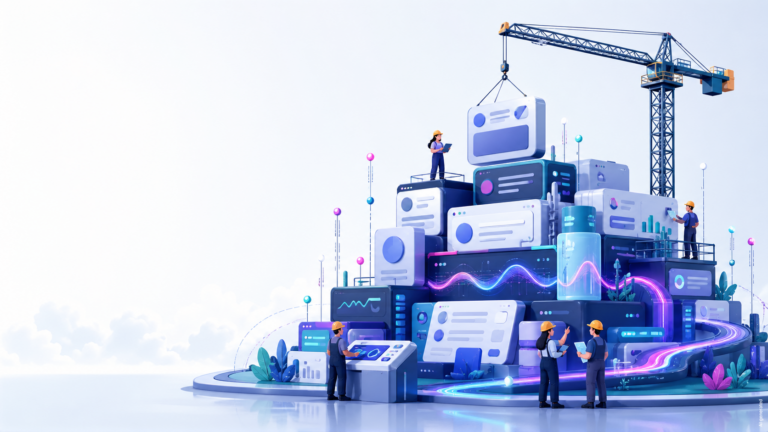
Who would build a new office building using their own staff, instead of commissioning external specialists, i.e. architects, structural engineers, construction companies, etc.? Who would do that? Nobody! So why, I ask myself, do people get the idea to run a complex electronic „construction project“ on the side? With existing employees, without additional resources and specialised know-how? This is not only a risky approach, but in my experience, problems, delays and, all too often, the failure of such „little projects“ are practically guaranteed.
That is why I strongly recommend that players in the audio industry seek external expertise and resources, receive consultancy, and have the digital transformation process professionally managed and supported.
I know consultants have fallen into a bit of disrepute due to certain political excesses, but that's naturally not true for all of them. An external consulting firm has several advantages, provided, of course, that it specialises in the audio industry and information technologies: it's not blind to its own operations. It brings experience from similar projects at other companies and, last but not least, it is as knowledgeable about the audio market as it is about IT development.
Digital transformation is an ongoing process that can and must be broken down into partial steps, individual projects, and intermediate goals. The existing staff are occupied with everyday tasks in already lean structures. This is important because everyday business secures today's operations.
Projects, on the other hand, are intended to secure the business of the future. And as I said, you need capacity, know-how, time and focus, a realistic project plan, and experienced project management. That's why I strongly recommend getting professional external support for this. It is a – plannable – investment that pays off!
3 good reasons why audio publishers should bring in external consultants/project managers for digital transformation:
- A firm specialising in consulting and project management knows what is happening in the market and how it is likely to develop. It knows the industry in detail and knows what competitors are doing, what new ideas exist and how problems can be solved. It all starts with an exchange. The function of the consulting company is not to tell the audio publisher what they should do, but what they can do.
- Once the audio publisher has decided on a specific goal or a new business model, the consulting firm ensures well-founded planning and a smoothly managed project that runs in parallel to day-to-day operations and doesn't strain the client's structures. The external company is responsible for the project's success.
- Every project has a beginning and an end, and a defined scope that can be precisely budgeted. In their own interest, the external consulting firm will do everything possible to bring the project to a successful conclusion according to plan. This is the best guarantee for the Audiopublisher to truly make progress with digital transformation.
You are Nico Aprile
These posts might interest you